Environmental Due Diligence
The EDR® NEPASearch Map Report
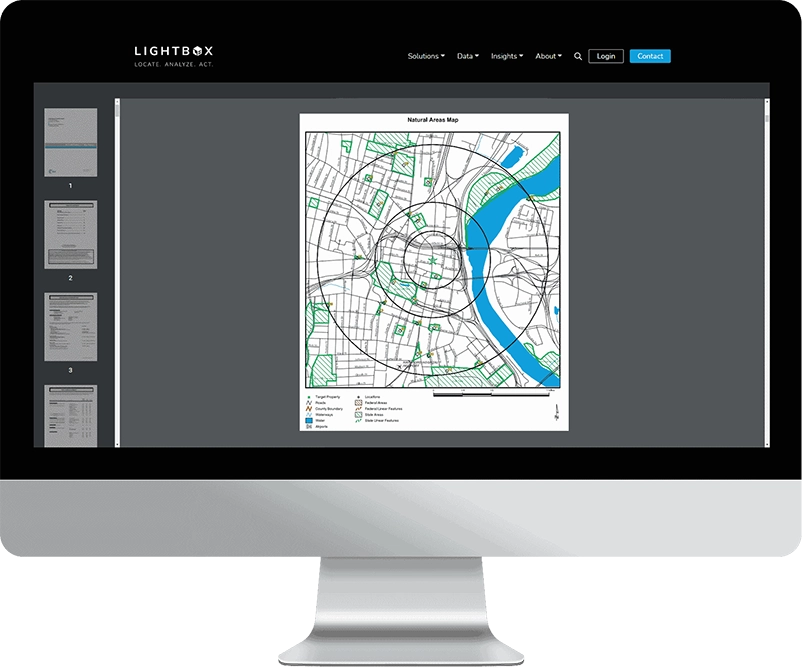
The EDR® NEPASearch™ Map Report brings environmental and cultural resource screening into one organized PDF to help teams identify potential considerations early. Five mapped sections and a front-of-report Map Findings Summary organize available data around key resource areas and relevant site-based categories in the FCC environmental checklist under 47 CFR § 1.1307, giving teams a practical starting point for project scoping, NEPA-related research, and focused follow-up.
Key Benefits
Start NEPA Research Faster
Consolidate available environmental and cultural resource information into one report so teams can identify potential constraints early.
Five Focused Map Sections
Review Natural Areas, Historic Sites, Flood Plains, Wetlands, and FCC & FAA Sites through separate color maps and detailed findings.
FCC Checklist Context
Use the Map Findings Summary to connect available datasets with relevant site-based categories in 47 CFR § 1.1307 and organize initial screening without replacing agency-specific review.
Plan the Next Steps
Use detailed records, source links, and agency contacts to focus follow-up research, consultation, and field review.
Features & Capabilities
Each EDR® NEPASearch Map Report combines mapped results, regulatory context, detailed records, and source documentation in a project-ready PDF.
Data & sources
- Natural areas and sensitive species: Available information for federal lands, designated wilderness areas, wildlife preserves and refuges, wild and scenic rivers, threatened or endangered species, critical habitat, and state natural-resource datasets.
- Historic and cultural resources: National Register of Historic Places data, available State Historic Preservation Office (SHPO) records, historic districts and properties, Indian Reservation context, and selected trail or cultural-resource sources.
- Floodplain and wetlands information: Available FEMA flood-hazard data, National Wetlands Inventory data, and state wetlands sources.
- FCC, FAA, and infrastructure context: Available antenna and tower records, AM/FM and cellular facilities, airports and obstruction data, power lines, and related siting information.
Report structure & context
- Map Findings Summary: An at-a-glance view of databases searched, search distances, findings within or near the search area, and related FCC checklist references where applicable.
- Five color maps and detailed findings: Separate mapped sections show findings relative to the proposed site, with available distance, direction, database, record attributes, and source links.
- 47 CFR § 1.1307 reference framework: Organizes available data around relevant site-based categories such as protected lands, species and habitat, historic properties, floodplains, surface-feature changes, and certain antenna-tower conditions. It is not a complete FCC NEPA review.
- Government records and key contacts: The source appendix identifies records searched, available source currency, database descriptions, and agency contacts for follow-up research.
Deliverables & coverage
- PDF report: A single report for project documentation and incorporation into broader environmental review files, assessments, and related studies.
- Coverage transparency: Federal and state coverage, record detail, and source currency vary by jurisdiction and source availability; the report documents the government records searched.
Workflow Fit
NEPASearch fits best at the beginning of a project, where a broad desktop screen can help shape the scope of follow-up work.
Early project scoping
Identify mapped environmental and cultural-resource considerations before detailed studies, fieldwork, or agency coordination.
Telecommunications and FCC site review siting
Support initial screening for proposed communications facilities and organize information for FCC review workflows.
Federally funded, permitted, or licensed projects
Establish a starting point for infrastructure and development projects involving federal funding, permits, approvals, licensing, or land actions.
Environmental review preparation
Assemble preliminary information for use alongside agency procedures, consultation, field review, and qualified professional analysis.
Follow-up research planning
Prioritize records, locations, agencies, and subject areas that may require confirmation or more detailed study.